Garmin Fenix 9 Review 2026: Is the Upgrade Worth It?
Garmin Fenix 9 Review 2026: Is the Upgrade Worth It?
Last updated: August 26, 2026
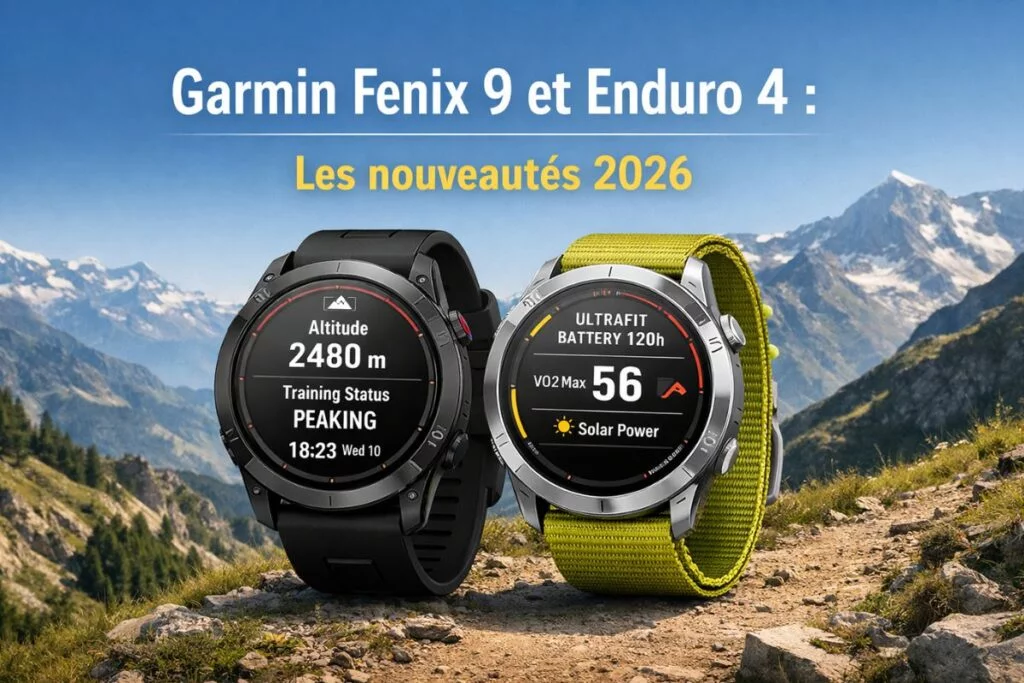
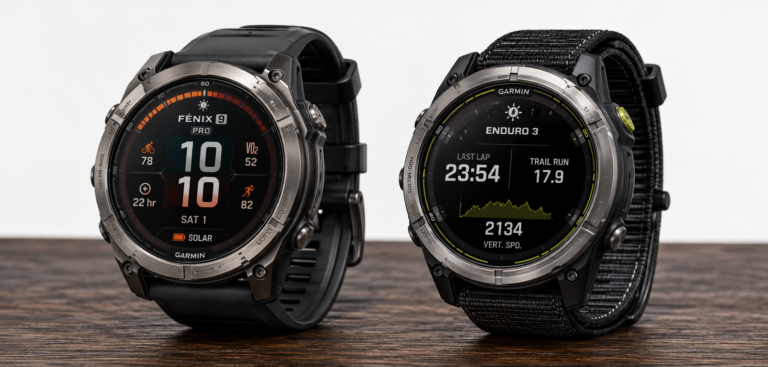
Garmin has just unveiled its newest flagship outdoor smartwatch, the Fenix 9, alongside a more premium Fenix 9 Pro variant, at a “Play Harder” launch event on August 25, 2026. After more than two and a half years since the Fenix 8, this release brings a noticeably brighter display, faster mapping, a titanium build on the Pro line, and battery life stretching into the hundreds of days on solar models. Here’s a full breakdown of what’s new, the specs across every version, and whether it’s worth buying.
⚠️ Placeholder link — confirm this points to the correct size/tier (43mm/47mm/51mm, AMOLED/Solar, with or without inReach) before publishing, since each configuration is a separate listing.
Table of Contents
- What’s New in the Fenix 9?
- Fenix 9 vs Fenix 9 Pro: Key Differences
- Full Specifications
- Battery Life Breakdown
- Display and Design
- New Software Features
- Pricing and Available Models
- Pros and Cons
- Should You Upgrade from the Fenix 8?
- FAQ
What’s New in the Fenix 9?
The headline upgrade is the display: the standard Fenix 9’s AMOLED screen is roughly twice as bright as the Fenix 8’s, while the Fenix 9 Pro pushes peak brightness to 3,000 nits — putting it on par with devices like the Apple Watch Ultra 2. Storage has doubled to 64GB, RAM has increased by around 50% over the Fenix 8, and the map engine has been rebuilt for noticeably faster panning and route-building, addressing a common complaint about lag in the previous generation.
Fenix 9 vs Fenix 9 Pro: Key Differences
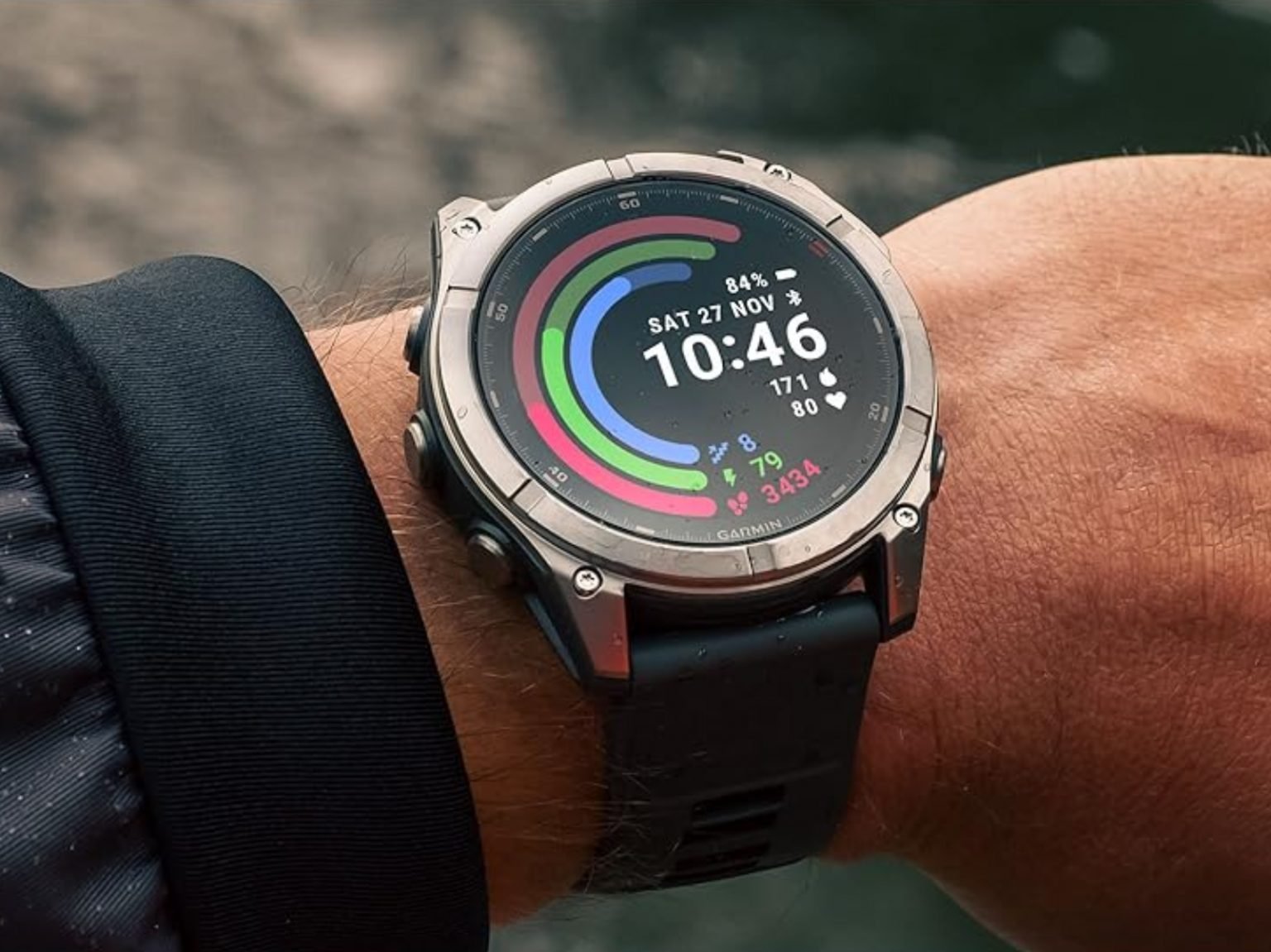
Unlike the Fenix 8 generation, where the Pro model launched separately, the Fenix 9 and Fenix 9 Pro arrived together this time. The main differences:
- Case material: The Pro is Garmin’s first Fenix with a full titanium case; the standard Fenix 9 uses a titanium rear cover only.
- Display brightness: Standard Fenix 9 reaches roughly 2,000 nits; the Pro reaches 3,000 nits, and the 51mm Pro gets a larger 1.5-inch panel (15% bigger than the Fenix 8).
- Connectivity: Optional inReach satellite messaging and LTE are available on all three Pro sizes for the first time — previously limited to select configurations.
- Solar option: Only the Pro line offers solar-charging models (in 47mm and 51mm), using a transflective MIP display instead of AMOLED.
- No microLED option: Unlike last year’s Fenix 8 Pro, which offered an ultra-bright (but heavier and pricier) microLED display, Garmin has skipped that option this generation in favor of the 3,000-nit AMOLED for most buyers.
Full Specifications
| Component | Fenix 9 | Fenix 9 Pro |
|---|---|---|
| Case material | Fiber-reinforced polymer, titanium rear | Full titanium |
| Sizes | 43mm, 47mm, 51mm | 43mm, 47mm, 51mm |
| Display | AMOLED, ~2,000 nits | AMOLED (~3,000 nits) or MIP Solar |
| Display size (largest) | 1.4-inch | 1.5-inch (51mm) |
| Storage | 64GB | 64GB |
| Lens | Sapphire | Sapphire |
| Water resistance | 10 ATM / 40m dive rated | 10 ATM / 40m dive rated |
| Connectivity | Bluetooth, Wi-Fi, ANT+ | + optional LTE and inReach satellite |
| Starting price | $999.99 | $1,099.99 |
Battery Life Breakdown
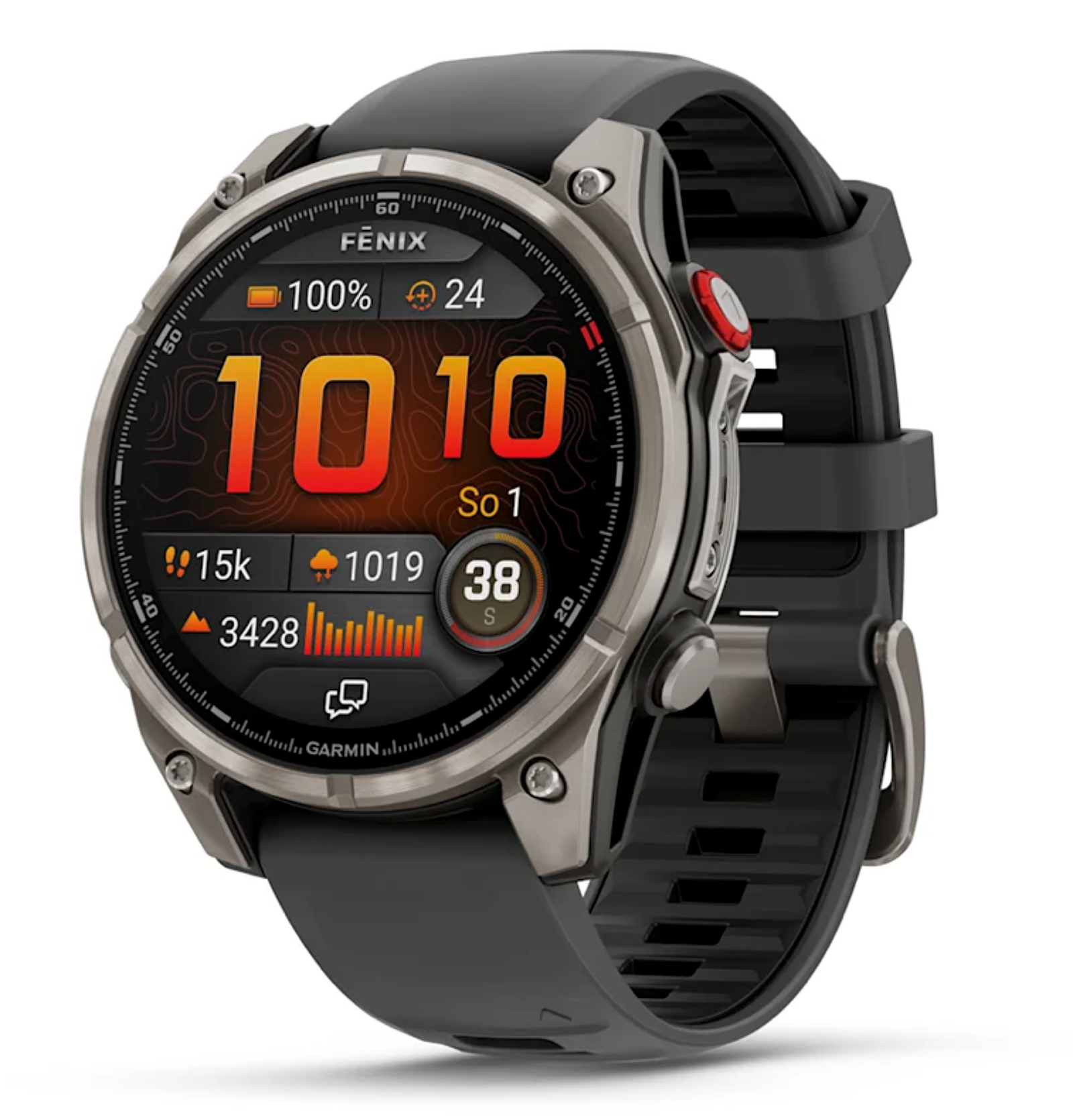
Battery life varies significantly by size and display type:
- Fenix 9 (43mm): up to 10 days in smartwatch mode, 15 days in low-power mode
- Fenix 9 (47mm): up to 16 days in smartwatch mode
- Fenix 9 (51mm): up to 29 days in smartwatch mode
- Fenix 9 Pro (43mm AMOLED): up to 10 days in smartwatch mode
- Fenix 9 Pro (47mm AMOLED): up to 18 days in smartwatch mode
- Fenix 9 Pro (51mm AMOLED): up to 31 days in smartwatch mode, 42 days low-power
- Fenix 9 Pro Solar (47mm): up to 34 days in normal use with sufficient sunlight
- Fenix 9 Pro Solar (51mm): up to 57 days in normal use, and up to 291 days in power-saving mode under sufficient sunlight
The Solar Pro models are clearly aimed at endurance athletes and multi-day adventurers who can’t recharge often, while the AMOLED versions prioritize display quality over maximum battery stretch.
Display and Design
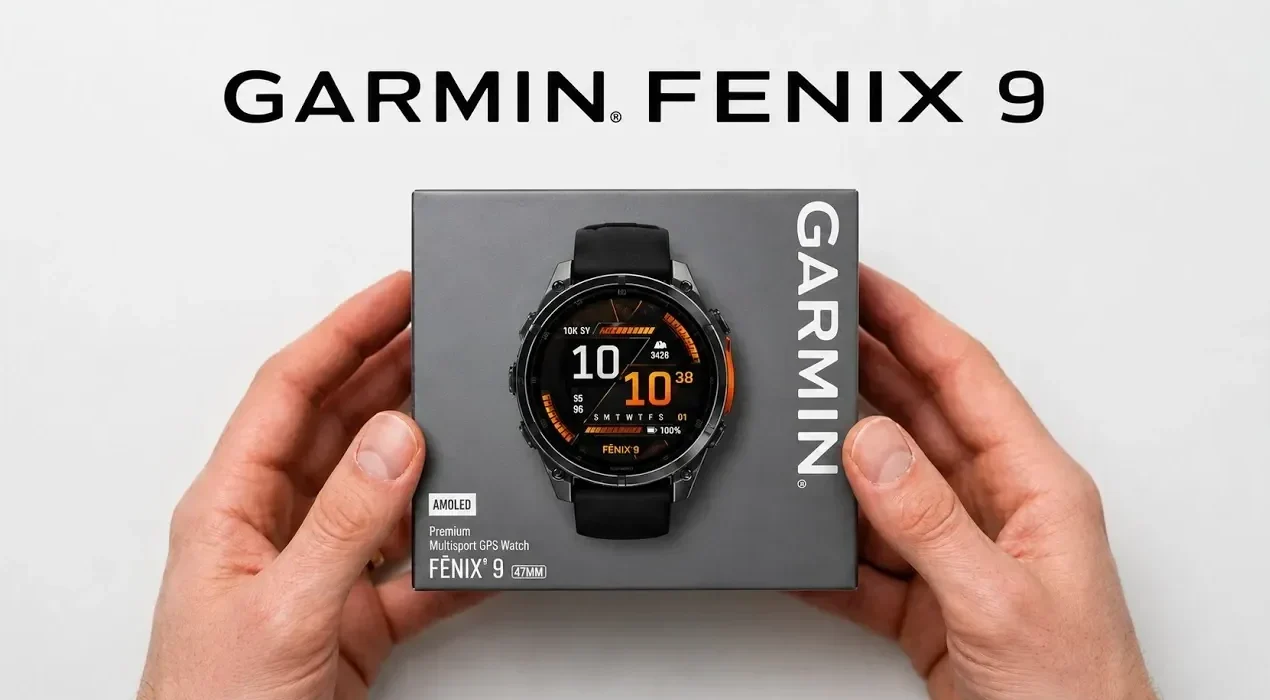
Both watches carry scratch-resistant sapphire lenses and are dive-rated to 40 meters. The Pro’s titanium case is described as thinner than its predecessor despite the upgraded internals. New ComfortFit accessory bands are also available, including a fabric split-weave design built for stretch, durability, and moisture resistance with quick-swap functionality.
New Software Features
- Garmin Epic: compiles multi-day activities into a single narrative summary combining photos, health data, and performance highlights
- ArcheryX: a new real-time shooting timing and aiming feature, replacing the older Archery profile
- Full indoor rowing suite: VO2 Max, FTP, power curve/zones, and lactate threshold tracking for compatible rowing machines
- GameOn app compatibility: expands the watch’s app ecosystem beyond pure fitness tracking
- Green flashlight mode: added to the integrated LED flashlight to help preserve night vision on after-dark adventures
Pricing and Available Models
- Fenix 9: starts at $999.99 (43mm and 47mm), rising to $1,099.99 for the 51mm — available to order from August 28, 2026
- Fenix 9 Pro: starts at $1,099.99 (43mm and 47mm AMOLED), $1,199.99 for the 51mm
- inReach connectivity: adds approximately $100 to any Pro configuration
- Solar Pro models: priced at the same tiers as their AMOLED counterparts ($1,099.99 for 47mm, $1,199.99 for 51mm)
Note: prices may vary slightly by region and retailer — always check Garmin’s official site or an authorized reseller for the most current pricing.
🛒 Ready to buy?
- 🔹 Check Garmin Fenix 9 price on Amazon — from $999.99
- 🔹 Check Garmin Fenix 9 Pro price on Amazon — from $1,099.99
Pros and Cons
Pros:
- Major display brightness upgrade, especially on the Pro’s 3,000-nit AMOLED
- Faster, smoother map engine — a long-standing pain point finally addressed
- Doubled storage (64GB) for offline maps and music
- Solar Pro models offer battery life measured in months, not days
- Titanium case now available at more accessible sizes (43mm included for the first time on Pro/inReach tiers)
Cons:
- Premium pricing, especially with inReach added ($1,100–$1,300+ range)
- No microLED option this generation for buyers who wanted the absolute brightest display
- Smaller 43mm models still trade off significant battery life compared to the 51mm
Should You Upgrade from the Fenix 8?
If you rely heavily on the watch’s mapping and navigation features, the rebuilt map engine alone may justify the upgrade — reviewers have noted the previous generation’s map lag is essentially gone. If your Fenix 8 is only two years old and you don’t need brighter displays, satellite messaging, or extended solar battery life, the case for upgrading immediately is less urgent. The Fenix 9 makes the most sense for new buyers entering the Fenix ecosystem, or Fenix 8 owners who specifically want the Pro’s titanium build, satellite connectivity, or dramatically longer solar battery life.
FAQ
When is the Garmin Fenix 9 available to buy?
Both the Fenix 9 and Fenix 9 Pro are available to pre-order starting August 28, 2026.
What’s the main difference between the Fenix 9 and Fenix 9 Pro?
The Pro features a full titanium case, a brighter 3,000-nit AMOLED display, optional inReach satellite connectivity on all sizes, and an optional solar-charging MIP display — none of which are available on the standard Fenix 9.
How long does the battery last on the Fenix 9 Pro Solar?
Up to 57 days in normal use and up to 291 days in power-saving mode under sufficient sunlight, on the 51mm Solar model. The smaller 47mm Solar model tops out at up to 34 days in normal use.
Does the Fenix 9 have satellite messaging?
Only the Fenix 9 Pro line offers optional inReach satellite connectivity, available across all three sizes for the first time. The standard Fenix 9 does not include this feature.
Is the Garmin Fenix 9 worth buying over the Apple Watch Ultra 2?
The Fenix 9 Pro’s peak brightness matches the Apple Watch Ultra 2, but Garmin offers significantly longer battery life, especially on Solar models, along with deeper multisport and outdoor navigation tools. Apple’s ecosystem integration and app selection remain stronger for general smartwatch use.
This article is based on Garmin’s official launch announcement and early hands-on coverage as of August 26, 2026. Specifications and pricing are subject to change — please verify the latest details on Garmin’s official site before purchasing.